Introduction
The world of fashion is as dynamic as it is exclusive, with trends that come and go with the seasons and designs that push the boundaries of creativity and practicality. Behind the glamorous runways and the meticulously curated shop windows lie the minds of the industry's most celebrated designers. These individuals not only set the pace for what's in vogue but also reflect the changing landscapes of culture, politics, and technology through their creations. In an effort to peel back the layers of mystique and glamour, we sat down with some of the top designers from Premier Clothes, a leading fashion house known for its innovative designs and influential role in setting global fashion trends. Their insights into the design process, inspiration sources, and views on the future of fashion offer a rare glimpse into the minds responsible for dressing the world's most stylish individuals.
This exclusive series of interviews reveals not just the creativity and passion that drive these designers but also the practical challenges they face in bringing their visions to life. From conceptualization to the final product, the journey of a Premier Clothes garment is a testament to the dedication and skill of its creators. Through their stories, we aim to provide an in-depth understanding of the current state of fashion design, the impact of technological advancements, and the ethical considerations that are increasingly coming to the forefront of the industry.
In this Introduction section, we delve into the fascinating evolution of fashion over the decades. From the iconic little black dress introduced by Coco Chanel in the 1920s to the modern streetwear trends popularized by influencers today, the narrative of style is ever-evolving. Understanding the historical context behind fashion trends helps us appreciate the cultural influences and societal shifts that shape our clothing choices. Through this lens, we gain a deeper appreciation for the artistry and innovation that define the dynamic world of fashion.
The Inspiration Behind the Collections
Every designer has a unique source of inspiration, a muse that guides their creative process. For Anna Li, one of Premier Clothes’ senior designers, inspiration struck during a solitary hike through the Scottish Highlands. The rugged landscapes and the play of light on the mountains at dawn led to the creation of her latest collection, which features a palette of earthy tones and textures that mimic natural elements. Li emphasizes the importance of connecting with nature to find beauty in the raw and untouched, a theme that resonates strongly in her designs.
Meanwhile, Marcus Du Bois, known for his avant-garde approach, draws inspiration from urban architecture and the pulsating energy of city life. His collections often incorporate metallic elements, reflective surfaces, and asymmetrical lines that echo the futuristic aspects of modern metropolises. Du Bois’ work showcases how the built environment and its interaction with light and space can be translated into wearable art.
On the other hand, Eliza Martinez finds her muse in the rich tapestry of history and culture. Her collections are a homage to the traditional craftsmanship of indigenous communities around the world. By integrating these age-old techniques with contemporary designs, Martinez not only creates stunning pieces but also helps preserve these valuable cultural heritages. Her work is a reminder of the fashion industry's power to act as a bridge between the past and the present, the global and the local.
Exploring the depths of inspiration behind fashion collections unveils a treasure trove of creativity and storytelling. Take, for example, the ethereal gowns of the latest collection by designer Mia. Inspired by the play of light on water, each piece embodies a fluidity that mesmerizes the onlooker. This intricate connection between nature's beauty and sartorial elegance showcases how the designer's vision is intricately woven into every stitch, creating a harmonious blend of art and wearability.
The Design Process: From Concept to Creation
The journey of a garment from an initial idea to a finished product is a meticulous process that involves multiple stages of development. According to Li, the design process begins with extensive research, which includes studying current trends, historical fashion cycles, and potential future directions. This phase is critical for ensuring that each collection is not only aesthetically pleasing but also relevant and forward-thinking.
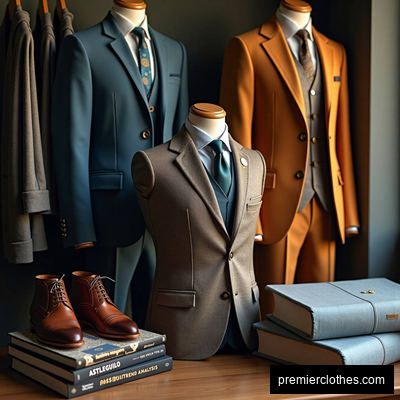
Following the research phase, designers like Du Bois engage in sketching and fabric selection. This step is where the visual aspect of the collection starts to take shape, with considerations for color schemes, materials, and silhouettes. Du Bois highlights the importance of fabric choice in achieving the desired look and feel of a garment, as well as its sustainability and impact on the environment.
Prototyping is the next critical stage, as described by Martinez. This is when designs are translated into physical pieces through a series of samples. Prototyping allows designers to test the fit, movement, and overall execution of their ideas, making necessary adjustments before final production. Martinez points out that this stage is often the most challenging, requiring a delicate balance between artistic vision and practical functionality.
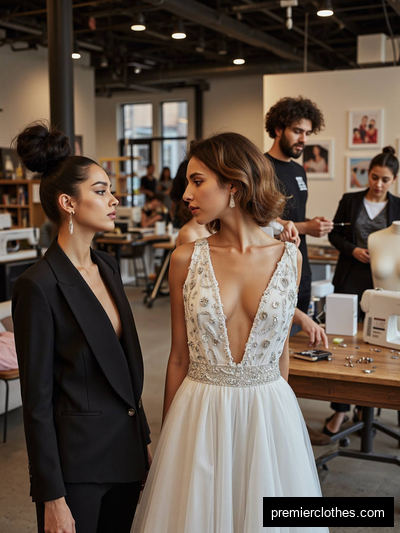
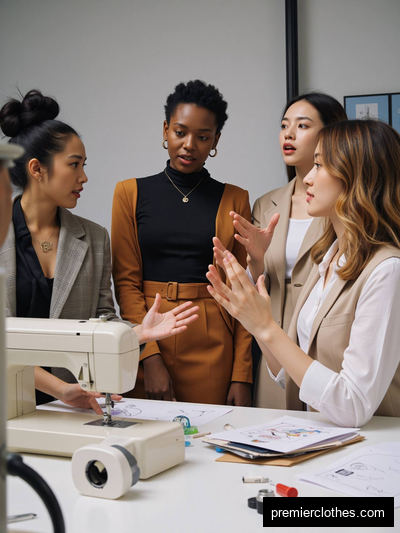
The final step is the production of the collection, which involves close collaboration between designers, pattern makers, and seamstresses. This teamwork ensures that each piece reflects the high standards of quality and craftsmanship that Premier Clothes is known for. The designers unanimously agree that seeing their concepts materialize into tangible garments is one of the most rewarding aspects of their job.
Beyond the initial concept phase lies the intricate stage of material selection and prototyping. Designers meticulously evaluate fabric choices, considering factors like drape, texture, and durability to bring their vision to life. Through prototyping, adjustments are made to perfect the fit and functionality of the garment, ensuring it meets both aesthetic and practical standards. This phase often involves collaboration with skilled patternmakers and seamstresses who translate the design into a tangible piece, bridging the gap between concept and creation.
Technological Advancements in Fashion Design
The fashion industry is no stranger to innovation, with technology playing an increasingly significant role in the design process. 3D printing, for example, has opened up new possibilities for creating intricate details and structures that were previously impossible to achieve through traditional methods. Li has experimented with 3D-printed fabrics in her collections, resulting in pieces that offer a unique blend of artistry and technology.
Artificial intelligence (AI) is another area where fashion design is seeing significant advancements. Du Bois mentions using AI algorithms to predict upcoming trends and analyze consumer behavior, allowing for more targeted and efficient design strategies. AI is also being utilized in the personalization of garments, offering customers bespoke options based on their preferences and body measurements.
Sustainability is a major concern in the fashion industry, and technology is playing a key role in addressing this issue. Martinez is particularly passionate about using sustainable materials and production methods. Innovations such as bio-fabrication, where clothing is grown from cells, and digital sampling, which reduces waste from physical prototypes, are at the forefront of her design philosophy. These technologies not only minimize the environmental impact of fashion but also pave the way for a more ethical and conscious industry.
In the realm of Technological Advancements in Fashion Design, 3D printing has emerged as a game-changer. Designers can now rapidly prototype intricate designs, pushing the boundaries of creativity and efficiency. Additionally, the integration of augmented reality (AR) in fashion shows has revolutionized the runway experience, offering viewers a digital front-row seat and enabling designers to showcase their collections in innovative ways. These advancements not only streamline production processes but also open up a world of limitless possibilities for the future of fashion.
Ethical Considerations and the Future of Fashion
As the fashion industry evolves, so too does its ethical responsibilities. The designers at Premier Clothes are acutely aware of the social and environmental implications of their work. Li, Du Bois, and Martinez all stress the importance of sustainable practices, from sourcing eco-friendly materials to ensuring fair labor conditions in their supply chains. They believe that fashion should not only be about aesthetics but also about making a positive impact on the world.
The future of fashion, according to our interviewed designers, lies in the balance between innovation and sustainability. They envision a world where fashion transcends its role as mere clothing and becomes a statement of individuality, ethics, and environmental stewardship. The use of recycled materials, the shift towards slow fashion, and the integration of technology are seen as key drivers in this transformation. The designers are optimistic about the industry's potential to change for the better but acknowledge that this will require a collective effort from designers, brands, and consumers alike.
In exploring the intersection of ethical considerations and the future of fashion, it becomes evident that sustainability plays a crucial role. Brands like Stella Mc Cartney and Patagonia are leading the way by incorporating eco-friendly materials and ethical practices into their production processes. This shift towards sustainability not only addresses environmental concerns but also sets a precedent for the industry at large to prioritize ethical sourcing and production methods, ultimately shaping a more responsible and conscientious future for fashion.
Conclusion
The insights shared by Premier Clothes' top designers offer a fascinating look into the world of high fashion. It's a world that is constantly evolving, shaped by the creativity and vision of its leading figures. From the initial spark of inspiration to the final touches of a collection, the design process is a journey of innovation, dedication, and meticulous craftsmanship. As technology continues to reshape the industry, these designers are at the forefront, embracing new tools and methods to create fashion that is not only beautiful and trend-setting but also sustainable and ethically responsible.
As we look to the future, it's clear that the fashion industry is on the cusp of a significant transformation—one that prioritizes the well-being of our planet and its inhabitants. The designers at Premier Clothes are leading the way, proving that fashion can be a force for good, pushing us towards a more sustainable and ethical world. Their work serves as a powerful reminder that behind every garment, there is a story of creativity, passion, and hope for a better future.
In conclusion, the designers at Premier Clothes have not only provided valuable insights into high fashion, but they have also highlighted the importance of sustainable practices in the industry. Their innovative approaches to design not only showcase creativity but also a commitment to eco-friendly materials and ethical production methods. By emphasizing the significance of sustainability in fashion, Premier Clothes sets a powerful example for the industry, inspiring both designers and consumers alike to prioritize environmental responsibility alongside style and luxury.